Read a Chinese sentence aloud and see each syllable scored, with pinyin over every character. When a tone slips, the app tells you which one you said and which one it should be.
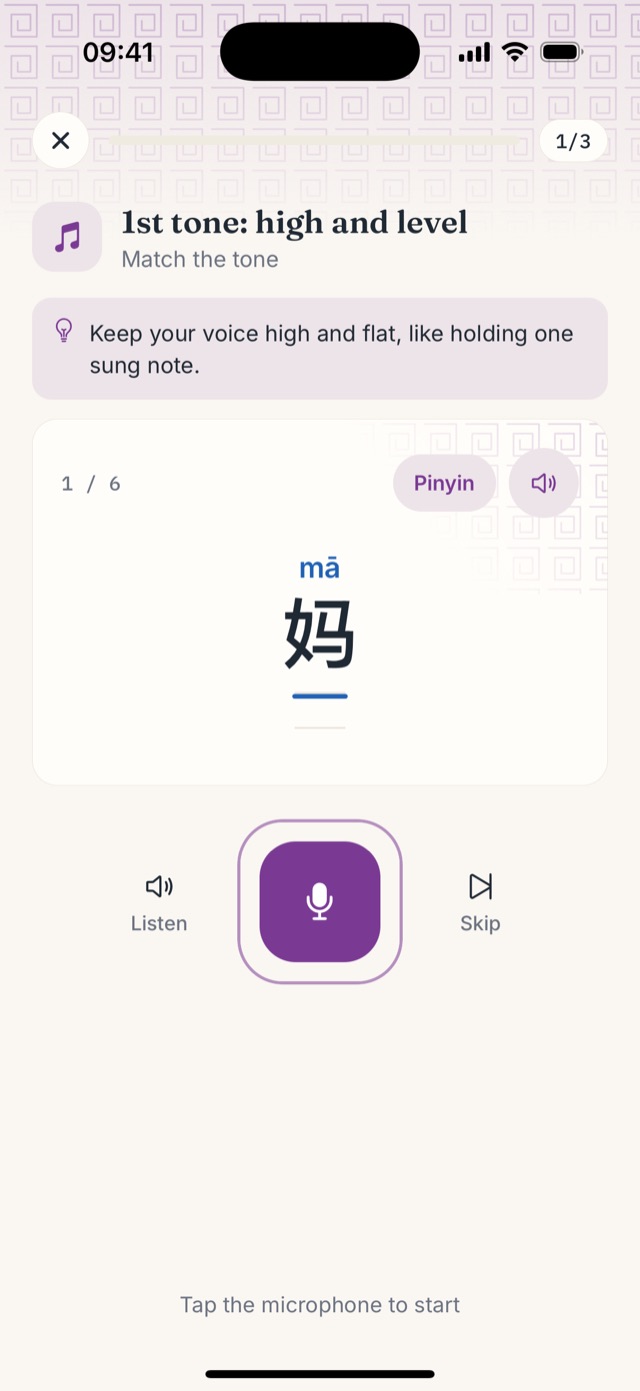
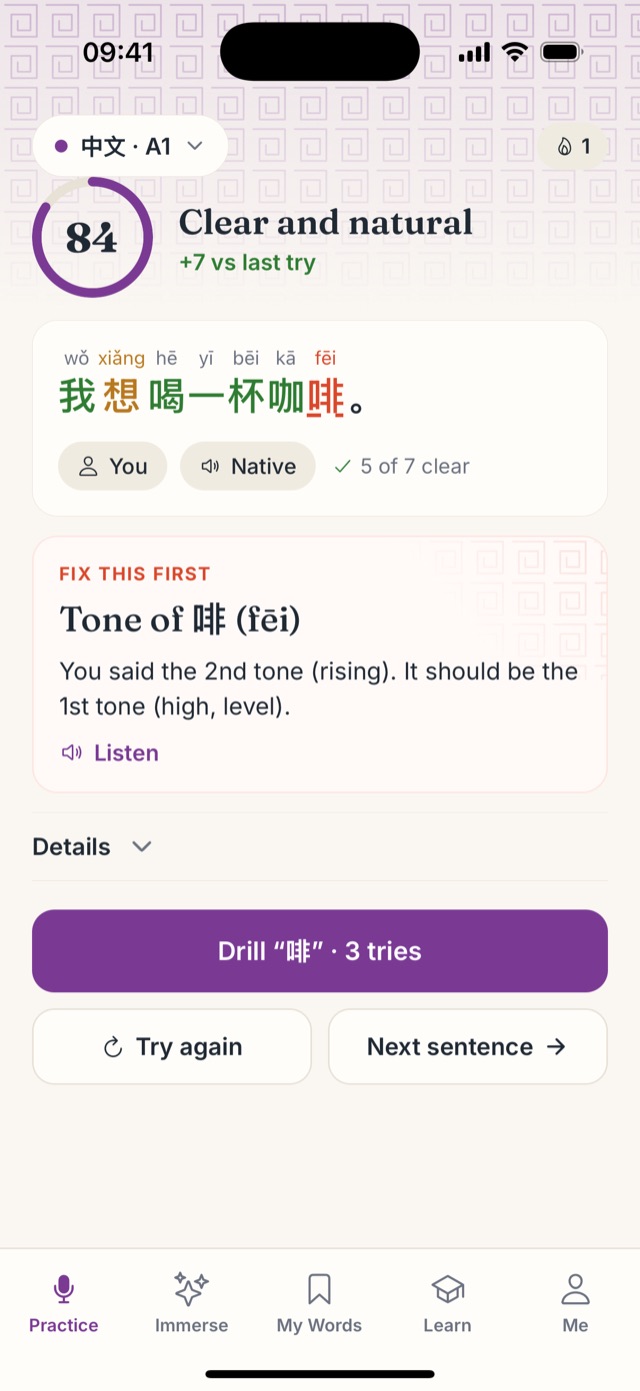
Practice sentences full of these sounds and see straight away which words slipped.
The same syllable is a different word in each tone: mā mother, má hemp, mǎ horse, mà to scold.
Two third tones in a row: the first rises, so 你好 nǐ hǎo is said ní hǎo. 不 bù becomes bú before a fourth tone.
Curled-back retroflex sounds against flat ones: 是 shì and 四 sì are easy to mix up.
The tongue sits behind the lower teeth; ü is an “ee” with rounded lips.
b/p, d/t, g/k differ by a puff of air. Without it, 怕 pà comes out as 爸 bà.
Yes. Every syllable gets a tone score, and the feedback names the tone you said and the one it should be, for example “You said the 2nd tone (rising). It should be the 1st tone (high, level).”
Yes. Mandarin is one of the two free languages: 3 tries without an account, then 5 checks a day with a free account.
Start with the Pinyin & Tones course: the four tones, initials and finals, syllable by syllable. Then move to Chinese Basics and everyday sentences at A1.